
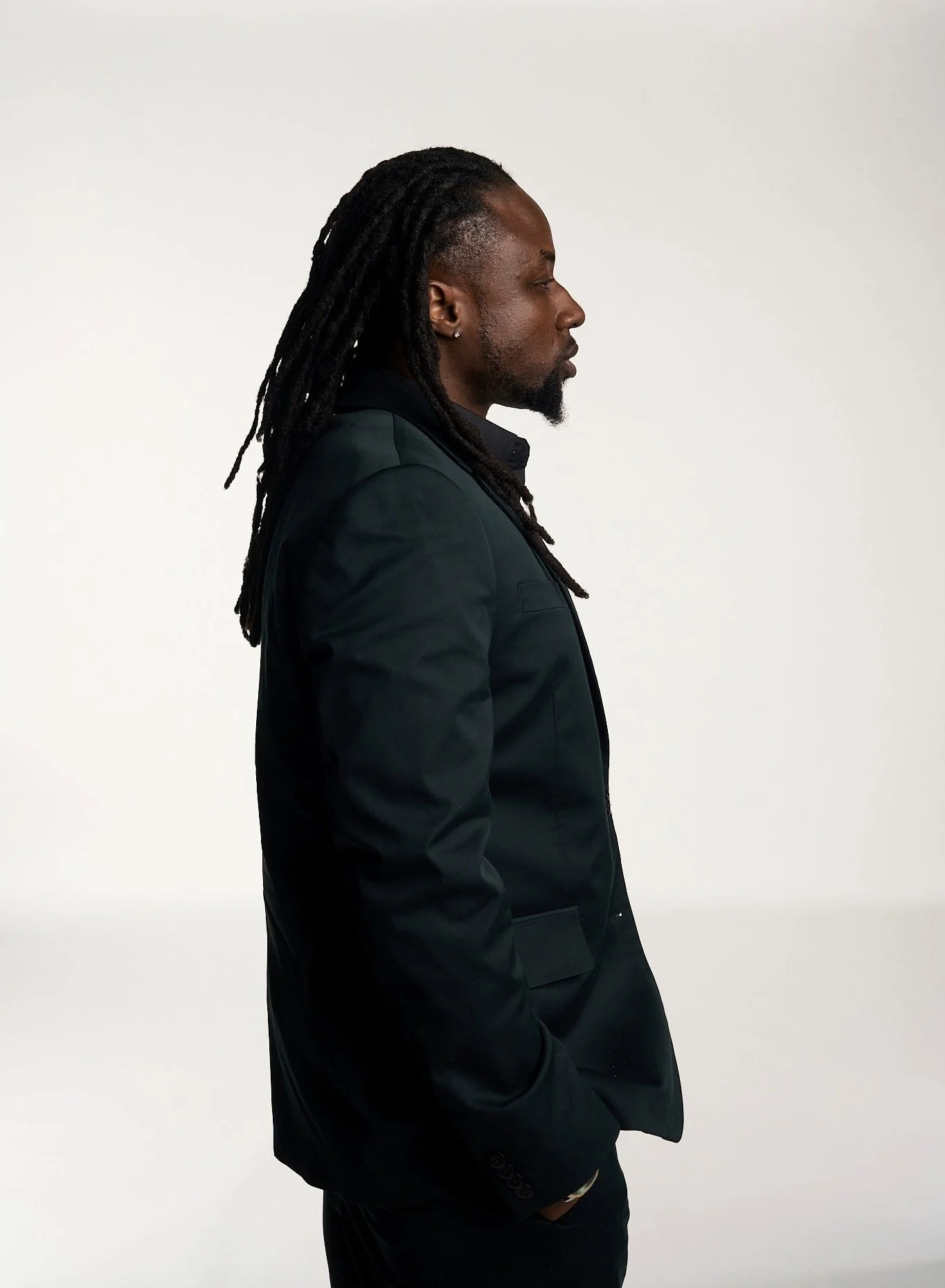
I create experiences that help people see a bigger world, see themselves differently, and take a meaningful step forward.
Peace,
I am what happens when curiosity meets imagination, curation meets experience design, and trauma leads to adaptation.
First-Generation College Graduate
Bilingual in English and Spanish (B1 Level)
4-time Upper Midwest Regional Emmy Award Recipient
My Love Letter to the Camera
If I could name one constant in my life, it would be the camera — not as a machine, but as a mirror.
It has never asked me to be perfect, only present.
It taught me that light has a voice, that silence can be sacred,
and that truth doesn’t need to shout to be seen.
I love this artform because it gives shape to the invisible.
Through a lens, I have learned to listen — to faces, to gestures, to places that might otherwise go unnoticed.
Every frame is a conversation between what is seen and what is felt.
The camera gave me belonging before I knew what that meant.
It let me build a language out of light — a way to speak when I had no words.
And in every click, I rediscover what it means to be alive, curious, and human.
This is my vow:
To keep looking.
To keep learning.
To honor the people and the places that trust me with their stories.
To design images that mean something, even when no one is watching.
To never let the pursuit of perfection replace the power of presence.
I don’t chase the image — I live for the moment it finds me.
And for as long as I’m able, I’ll keep creating, not for applause, but for connection —
to remind myself and others that light still has something to say.
Learning to See
When I was a child, I lived in the shadows.
Noise wasn’t allowed in our house. The TV couldn’t be too loud. I learned to tiptoe through life, to keep my presence quiet, to follow every rule. My mother lived by them, and so I learned to survive inside them.
I remember the little black-and-white box TV I found one day — small enough to hide in a closet, with dials that clicked through the channels. It became my window to the world. I’d sit there in the late ’90s and early 2000s, watching Everybody Loves Raymond, One on One, The Parkers. That last one I got to see in color because my mom liked it. We would sit together, silent, watching people laugh on-screen while our house stayed still.
I didn’t realize it then, but that silence was shaping me. I learned to hear what wasn’t said, to notice every flicker of expression, every shift of light across the wall. I was studying emotion, studying presence — without knowing it.
When I found the camera, I didn’t understand how it gave me a voice. I could see others clearly — what made them unique, what made them come alive — but when I turned the lens toward myself, I couldn’t find me. Maybe it makes sense. I had never been seen, and for a long time, I didn’t want to be. I used to turn off the lights, sit on the floor in the dark, and listen to the quiet hum of the world.
I hated the light as a kid. It made me feel exposed.
So when I became a filmmaker, I avoided it. For nearly a decade, I shot everything as it was — natural light only, no fixtures, no setups. I didn’t own lights. Maybe part of me still feared what they revealed.
But the camera — this small piece of technology I carried everywhere — started doing something I couldn’t: it made people look at me. It made them invite me into their stories. Through it, people asked for my opinion, trusted my vision, shared their imagination. It was like being at a friend’s birthday party for the first time — something I never got to experience as a kid.
I didn’t have many friends growing up. For my first seven years, it was mostly just me, my imagination, and the quiet. But now, through film, I’ve found a way to turn that silence into something else. I reflect others. I help them feel seen.
Maybe this is how I finally learned to see myself too.
Looking Inward By Examining My Growth Over The Last 15 Years
So I just went through my first 5 years of filming. It was very humbling to see my earliest video where I knew absolutely nothing about Cinematography.
I was just trying to capture those precious moments for my little brother.
It was also cool to see how recording basketball games helped me learn how to follow the action, even though it was a couple years later that I would learn how to keep the action in the frame. I noticed that that following of the action was carried with me in everything I did then a year later from 2010 to 2011 I began doing music in addition to sports and I kept that same framing and following the action. Funny thing is, I had no idea what I was doing at the time but my very first music video in 2011 was a oner, that tracked backwards framing one artista then the artist switches with another artist without the backwards tracking dropping or pausing landing on a finally reveal of the entire team. I remember that day, my original idea was to do it from inside but it wasn't working sonwe had to make a pívot on the spot and all i has was a Sony a65 with a lot Lens and no spotter. One shot kill. Then I noticed in a freestyle video that I was style framing centering the actioning but i was searching now for angeles, i didn't understand what Inwasndoing or why but I had this feeling that staying static the whole time was boring me so I moved the camera and landed ok some more interesting but not textbook frames. Then I started studying and I noticed this big time on my 3rd music video. There was a black background which was a garage I painted frame by frame in Photoshop lit by one overhead light, on the intro shot that light is swinging back and forth and then we cut into a circling shot of these two mobsters plotting a takeover, as I circle the outside of them sitting at this table they smoke a cigar blowing the smoke out into the distance, it's far from perfect but it's very impressive for my skills level at that point in time. I remember one of the most challenging shots was a low angle shot of the two of them approaching their vehicle to execute the heist and I held my camera mounted to a monopod outside a car window in the rain upside down on a monopod and has the car back up to get the tracking in motion. Then I had some interior shots of the car driving with them, a performance shot on the rear view mirror and then my favorite shot of them all, I got out of the car, all handheld so the camera was all over the place, I sneak up to a pizza delivery car and enter the car and show the delivery man at the front door, he spots me, I snatch two large pizza boxes out the back seat and run like hell back to he car before he catches me, o shut the door the pizza man slams on the window and we speed off, the camera turns to the back window as we see the pizza man chasing after us. It was amazing. I love that shot. Fast forward some more, I do another music video and this time I noticed that this is when I first discover my current handheld motion, because up to that point everything I had done I had tried to have this prestine stillness, which it never was because I had to hold the camera on the palm of my hand while I manually focused in every video. But in this video in the second half of it, I become freer and the camera tries to depict the high energy, it was a magical feeling to witness that Energy pass through my Lens from.the motion I created in my.body to the music mixed with the performsnce and the imperfecto focus. So I do another video and this video i remember was planned well and the original plan was not working sndnthis group had 5 artists all on one song so we decided to go in the alley and I do another oner that Is hidden by editing this Time and done completely in this drunken, sporadic motion that goes from the one artista.wallong out from.behind a garage into the alley over to another artist.who pretends to be hungover and barfs in a trash can up to am artist ok the roof of a garage that.jumps.fown midverse continúes rapping over to the fourth artist with a break that matches thos echo in the verse up to the street light back down to the artist that now is carrying a back over to the last artist.seated in a car to the finale where he carries the bag over to the truck where all the artist are.gathered over a body in a trunk. It was wild but it worked and people loved it. It's my second most viewed video at 9k views. Then something magical happened. I shoot another music video and by this time I'm probably 2-4 years in, I've shot more basketball tournaments and a wedding or two. In this music video, I come up with a home invasion idea that starts off with the main character tied up, bloodied and unconscious. I capture these shots of him, his hands tied up, his legs tied up, then he comes to and the camera cuts to his out of focus POV as the killer in the video, one of the artist approaches and covers his face with plastic, the angles, the acting, the motion is now a mixture of the smoothness I also arrived for mixed with this emotion led motion and it feels so intense that the producer tells me that we have to add a warning label because it feels that real! Then the performance shots are to this day my favorites. There's this drifting, jumping, out of focus, energy in the frames that make this person feel so menacing which is so fitting and cut in tween all of this is the home invasion. Hands down one of my best videos. So I notice after this video leading into 2016 that this motion, this free floating camera is now apart of me, I like it, I desire it to find a way to fit, to be make itself appropriate by discovering the energy in from of the lens. It's in weddings now, more controlled by I can see when I'm searching, luckily at the same time I was learning camera, I had already been learning editing from making a highlight video out of my best first video in 2010. So I know how to work with my footage and my edits enhance what I had already but in camera. Its a beautiful combination I possess. I even noticed that in one video for an r&b artist, albeit, not great I still understand a little bit about lighting as that had been my first time having lights and even gels. But I had almost created a Rembrandt lighting and I had a backlight as a rim. It wasn't anywhere near perfect but I understood. I still have 9 years more to look through but it has been very cool to see how my style has instinctively evolved and how, very few times, magic struck and I create a scene or in the case of the heist video, a dam near perfect visual.
“I’m Moving to Medellín, Colombia for 3 Months”
It all begins with an idea.
It all begins with an idea. Maybe you want to launch a business. Maybe you want to turn a hobby into something more. Or maybe you have a creative project to share with the world. Whatever it is, the way you tell your story online can make all the difference.
Don’t worry about sounding professional. Sound like you. There are over 1.5 billion websites out there, but your story is what’s going to separate this one from the rest. If you read the words back and don’t hear your own voice in your head, that’s a good sign you still have more work to do.
Be clear, be confident and don’t overthink it. The beauty of your story is that it’s going to continue to evolve and your site can evolve with it. Your goal should be to make it feel right for right now. Later will take care of itself. It always does.
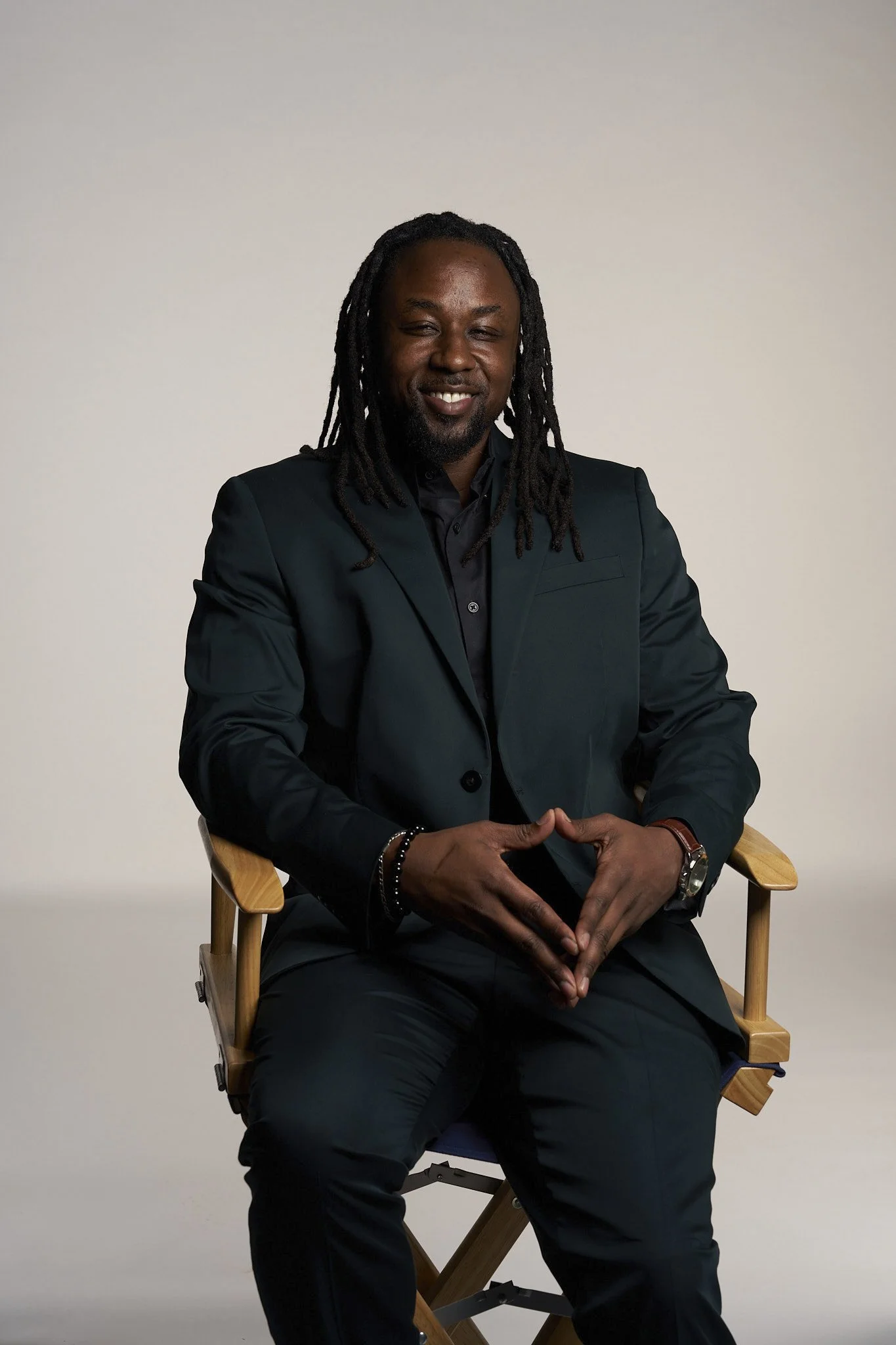
Brian Few Jr
We're not here to follow trends—we're here to build something timeless. With a blend of creativity, strategy, and heart, we help ideas come to life.
Eye of Few
I create films that help people see themselves with the dignity they forgot they had.
My work isn’t about capturing moments — it’s about honoring the truth inside them.
I come into every project without assumptions, without pre-written narratives, and without the need to control the outcome.
What I bring instead is presence — a sensitivity to the small human shifts that reveal who someone really is.
In front of my lens, people don’t perform.
They remember themselves.
I follow instinct over blueprint, humanity over hype, and emotional truth over perfect polish.
The result is work that feels alive, intimate, and unmistakably real.
I don’t create stories about people.
I create stories with them.
If you’re looking for a filmmaker who approaches your story with care, intuition, and deep psychological understanding — welcome.
You’re in the right place.
Dignity-Based Filmmaking
A creative approach built on presence, emotional intelligence, and the belief that every human has a truth worth honoring.
Core pillars:
Presence over planning — the story emerges from the moment, not the script.
Human-first direction — guiding people into who they are, not who we need them to be.
Emotional safety on set — the camera becomes a sanctuary, not a spotlight.
Instinct-driven visuals — your psychology guides composition, pacing, and tone.
Dignity as a visual language — shooting people in a way that elevates, affirms, and respects them.